Place

I was on a trail Thursday morning jogging lightly -very lightly apparently- because I startled a big doe up close as I rounded a sharp little bend.  The surprise was mutual.  I actually heard the deer before I saw her bounding away just yards from me.  The sun caught a wall of light tan flashing between a few trees, and at the moment I saw her she was pouncing up a slight incline off the trail and away.  The green curtains closed behind her immediately.  What I’d heard and felt first, actually, was the sudden hoof pounding on the trail, rapid deep thuds, exactly like a horse, a horse that had started, reared in some frantic way, and bounded in a savage pounce away from the danger.  I do feel a little slighted that in this story I am the danger, but I know from the angle of the trail bend that the deer went from a normal beautiful forest moment to suddenly seeing fully, in her immediate periphery, a full-sized human figure jogging towards her and maybe one or two seconds from collision. So, I get why the response was electric when she grasped it. (Perhaps the sound and direction of the wind had masked my approach somehow.) I hadn’t processed the event enough to even be slowing down by the time I had heard the trail thunder and saw the flash of tan.    It was a real animal moment.  I had felt the weight of this beautiful animal, and such a presence.  And I certainly felt that I was the clear intruder.

Whoops. Sorry about that. 

I got the same feeling once when I was stranded in Hawaii due to a storm. Given an unexpected free day, I went to go snorkeling in Hanauma Bay nature preserve. I stood chest deep, adjusted my mask and snorkel, and plunged under by simply dropping down to my knees on the sand. I looked out and saw such a kaleidoscope of creatures looking back at me that I was startled and popped back up gasping. Everybody was there, to include a little octopus. I felt like I’d accidentally parachuted into a stranger’s busy and crowded living room.

And again, when I was on a cruise ship. I accidentally walked through a nondescript door and found myself in a secret long ‘service’ tunnel bustling with rapidly moving lines of service people -waitstaff and all manner of cleaning and laundry people- all carrying stuff.  I quickly scrambled back out the ‘wrong’ door after my shock and immediately realized how the ship had been teeming all along with these invisible lines of hustle in its interior steel-corridor veins.    

Feeling out-of-place is a weird thing. Whose place is this anyway? Since we all are walking through our own stories in life, shouldn’t we all be in our own place no matter where we are? In these examples above, I felt like I’d walked out of my own story for a moment . . . as if each of our lives were taking place in a book on a library shelf and I’d wandered out of my book for a moment, looking confused. Someone yelled “Hey, Perrin, you’re one shelf down and two books over!” and I thanked them and am now safely back in my own story, back on page 63-158. (The remainder of the book is blank as of yet.)

I don’t know who’s editing this book, but there are some things in the previous pages I’d like to change.  But that’s a story for another day.  Today’s page includes a turkey and avocado sandwich at Panera Bread, where I’m writing this now.  Creamy tomato soup. A small cup of hot coffee and a neat little bag of chips.  A computer screen, words, and a spilling of my odd little ruminations. 

I like this place.     

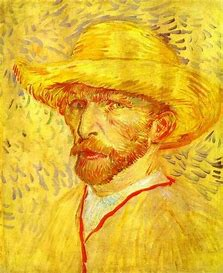
Self-Portrait

.

Every day is the same. Every day is here.

Cars. Houses.  People.  Nights.  Days.  

This is the canvas. Year after year. 

.

Live your own Van Gogh. 

Be tortured, be driven―go.

Be in love, be lonely, be crazy, be

beautifully focused on yellow.

.

Look at yourself looking back.  

See, and feel.

The contours of truth ravage

and the colors of truth heal.

.

Bloom late. Be poor. Be undiscovered.

Let the world not know.

You will still have your own

sunflower days and starry nights.

.

Find your own yellow.

.

.

An Arctic Realization

Transport

2to carry away with strong and often intensely pleasant emotion

.

The joy of reading was brought back to me recently while reading a book that I picked up by the merest happenstance. 

I’ve started to automatically be inclined toward digital entertainment and creativity interests― versus the printed word―like the rest of us swept up in this digital revolution.  It happened slowly and overlappingly until I had mostly transitioned from one camp to the other, the way one starts to have a new favorite candy over time.  Or perhaps the way one slides into alcoholism—you like it a lot at first but begin to sense that there is a rewiring going on and that it could well not be good.  Or, maybe we’re using digital media the same way we happily used DDT in the beginning, for years unaware of the neurological damage to the psyche’s landscapes over time.  But, as of now, I usually reach for Netflix or YouTube, or video games, etc. whereas most of this time would have been spent with books before.  Growing up, many of my siblings were big readers and we did well in school and even used to go to the library for the fun of it sometimes.  I would be enthralled sitting on my little chair in the big hushed important library; even as a child I read voraciously upon every imaginable subject as long as it was dinosaurs.  Later, I was an English Lit major in college and was force-fed books and great works of literature and so reading was/is anchored in me as one of the lifelong core importances.   

The happenstance was this:  me grabbing this book out of an enormous pile of books that were going to be discarded from an estate sale I was working at.  I took about twelve books and it broke my heart to let hundreds more obviously great books go to waste.  Books are virtually free nowadays and it is astounding to me:  from closely guarded papyrus scrolls at ancient royal libraries through the Gutenberg flourishing to now: boxes of free books everywhere you turn.   It has even become a significant trash/recycling problem in some ways.  It looks like the arc of the collapse of an animal population due to digital predation.     

Big caveat before you curmudgeonize me:  I know that a ton of the digital content is great, innovative, and there is an amazing energy behind new apps and new ways of -ugh- ‘consuming’.  (The vibe I get from ‘consuming content’ is very American:  I picture a taxed recliner and a bucket of Cheetos.  And, while we’re here, isn’t ‘content’ a stupidly flat way to describe all of digital creation?)

But the delicious digital offerings entice us into the world where we inevitably find ourselves grazing on empty calories for hours and hours- long after we watched the gateway thing- and we’ll never get that time back.  We are still as a society plunging headfirst into the wave; we’re wet and exhilarated but are in the moment before we feel the power of the wave.  Parents are noticing that they can’t get their teenagers off the phone at restaurants, or even between bites.  Military Basic Training centers are encountering a generation of kids with odd physical and mental frailties.  And mental health centers’ counselors are tracking serious issues bubbling up from the various tar pits of validation (like me!) that drive so much digital interface.  I think it might be a small matter of time before Draconian regulations start getting discussed.  Tik. Tok.

But the good news is that books are still incredible when you find an interesting subject married to a great writer. 

The book I’m reading now is Arctic Dreams and it is transporting.  From the beginning, I found myself rereading passages just to be in that moment again.  It’s about all things north and arctic―the history, the regions, landscapes, animals, weather, light, the wonder, magic, mystery, strength, colors and unforgiving but beautiful austerity and yet abundance of this vast region of our world.  And man’s forays into it, from original inhabitants to current incursions.  I’m still only a little ways into the book but am already in thrall with everything from the exquisite muskox behavior to all the unfamiliar and haunting rhythms of  light and time that govern everything about this land.  I wouldn’t presume to really describe these complexities―the author is such an expert and his writing is magnificent.  And transporting.  (Author: Barry Lopez)

Why is reading this so much more magic than watching a great documentary on the Arctic?

It’s the old ‘what’s better:  the book or the movie?’ question.  It’s almost always the book.  We know why, in general terms:  With books, we get to supply so much of the experience ourselves―launching from the author’s words into the limitless reaches of our imagination.  With books, we can read in our own quiet time and place, all the while indulging our favorite chair, blanket, and cup of tea made just so.  And with books, even the feel of the book, the smell of the pages, can be pleasing on its own.

But the thing that strikes me the most as I’m reading this 464-page book is how quiet this activity is.  Maybe there is a visceral connection to early childhood library experiences, but I don’t read unless it is very quiet.  I’m fortunate to live in a quiet place and it is always very quiet at night while I read.  Compared to the relentless audial assault of digital media, and most of life now, it is a balm. 

So.  It’s very quiet, I can feel the snug weight of book in my hand, I smell the pages as I riffle them.  Blue couch.  Something fleece on.  Tea in my favorite clear mug, the dab of cream still swirling.   I begin reading. The dark letters against the snow white pages are stark, clean, fresh, quiet, and ethereal in their power.  I am transported.  It is an arctic experience.              

Between the Elephant and the Ant

(with appearances by Chimps, a Monkey, and Cows)

I periodically have a conversation with my brother Keith about what will be the next ‘big thing’ society will realize we’ve been way wrong about forever. And this is big picture stuff like slavery, or women’s rights, or Civil rights, for example. The arc of our species’ growing ethical awareness is in sharp trajectory; as recently as Viking times even murder and theft were on the table as a societal norm. (They may have called it ‘raiding.’)

We both think the next ‘big thing’ in social change will involve how we treat animals, and I think that, consequently, we’ll not as a species be meat-eaters much longer in the grand scheme of things. By the grand scheme, I refer to the 10,000 years or so that we’ve been running around as people who could pass as human in that dimly lit dive-bar you frequented in college.

I know we already have vegetarianism, veganism even, and PETA-minded people but I haven’t really myself thought about the issue too much until recently. (I eat meat, by the way). But it brings so many nuances to the fore!

There is a vast spectrum available as to how and where we start:

On one end, think of a big kindly mommy elephant nuzzling her tiny young flappy-eared baby elephant and now someone walks up to the mother with a high-powered rifle and shoots her dead.  Surely, this is pretty goddamned close to murder, and it will trigger that kind of outrage.  But, on the other hand, if I squash an ant found on my kitchen counter, it will pass unnoticed.  Between that elephant and that ant, a lot of ethical decisions have to be made.    

How and where we start― hold it―we’ve already started.  By keeping pets, by enacting endangered species legislation, through various hunting regulations, and by nibbling at the edges of treating animals ethically in our agricultural industries, we’re sliding down the road of treating animals better already, right?

But, whoops―we still end up killing and eating billions of animals. 

Is it murder that we eat animals? 

Is it any different than a gang of Alpha chimpanzees chasing down and killing a neighboring monkey? (They may have called it ‘raiding’.) Tearing it apart and eating it after the frenzied howling attack? That animal, the unlucky monkey, was living the only life it knew and then was suddenly murdered and deprived of the rest of its life to sate the horrible engine of violence-hunger that the chimpanzees had worked themselves into. The chimps didn’t need the small amount of ‘food’ that each got and hunger was not the only issue. They had ample alternate food sources. Picture that scene, high in the trees, the grabbing and biting and then the horde tumbling down the branches with the kill, to tear it apart on the ground and revel in the torn bloody flesh, fur, and even passing the dead monkey’s legs, arms and skull among themselves in a goulish sharing ritual from hell. (I actually saw this in a documentary recently. F’ing horrifying.)

Now, is that scene, fully in the wild, ethically more repugnant, or less repugnant, than the scene of one of us picking up a nice cellophane-wrapped roast from the meat section of our grocery store?

Maybe I’m overthinking it, but I wonder if what we humans do is worse than what the chimp gangs do.  Let’s look at them side by side:

In common with the chimp attack is the fact that we humans also have alternate food sources and still choose to kill animals for food. We could immediately convert our entire society to healthy diets with plenty of protein―diets that do not involve slaughterhouses (just think of the word). Some forays into this conversion with Impossible Burgers, etc. send mixed messages: it must still look bloody. We must still sate the cultural inclination that it should look like we are tearing our teeth into a fellow animal’s flesh- even though we don’t really think of it while eating. So that’s the main commonality.

The main difference, one might suppose, is that, though we eat meat, we humans treat animals- and the irony is leaping off the page for me here- ‘humanely’.  Yet we’ve all seen these documentaries wherein terrible things are filmed covertly in some, arguably many, rogue slaughterhouses and you can’t even look at it.  I would like to concede, however, for the sake of the argument and certainly hoping it’s true, that in most slaughterhouses deaths happen ‘humanely’―and by that let’s presuppose an almost instantaneous killing with some high-power bullet or macabre machinery. 

And, having ceded that, I still would rather be the monkey than the cow.

That monkey was living the only life it knew -free as a monkey in a tree- and then was suddenly murdered and deprived of the rest of its life to sate the horrible engine of violence-hunger that the chimpanzees had.  But only two minutes of its life were wrecked by the chimps.  The cow was also living the only life it knew―-horribly restricted, crowded and subject to all manner of psychological, chemical, and physical rape in the name of fattening cows and profits.  It’s entire life.  We did that.  The chimps did no such thing to the monkey.  The monkey got two minutes of terror.  And it was over.  But the manner in which the cows are deprived of the rest of their lives is different. When the cows are herded into a slaughterhouse, after leading their entire shit life, the cows know what’s happening and you can see it in their wild eyes.  Their terror lasts much longer than two minutes before the blood gutters of the slaughterhouse stop running red for the day.   

Slow it down here, Kev.  Enough with the monkey and chimp stuff.  And the poor cows.  You’re freaking me out.

OK.  And I buried the lead anyway:  Recently I’ve been squashing the occasional ant on my kitchen counter.  Just a quick instinctive killing when I see them.  And here’s the thing, I can always see the moment they realize that the hammer of oblivion is falling:  they begin to run.  And here’s what freaked me out:  I can see that they are, well . . . frightened.  Right before I grab them with a napkin or squash them with something, they get scared and make desperate runs for it, trying to escape.          

I wonder what they’re thinking when they are scared and running?  There must be something going on in there, right?  Something!  And that something, that sentient little something, has to be on the spectrum of ethical consideration.  Am I murdering these poor little guys?  I feel bad enough knowing that I’m scaring them! 

I don’t know how to end this. 

I guess I’ll wrap it up with two things:  Granted, there is a lot of road between mama elephant and the ant.  But I’ll bet we get there.  We’d have to.  If not, then who are we calling animals?  And secondly, try not to think of that horrible chimpanzee attack every time you pick up a neat package of cellophane-wrapped meat at the supermarket . . . and realize that what we are doing is worse. 

0 for 5

I’ve been close to death many times in my life but it’s a pretty understandable result of my living an adventurous life deliberately. Besides a couple of decades of the wildest Army training, I’ve done a lot of rock climbing, some whitewater rafting, extreme hiking, mountaineering and all manner of such nonsense. I’m not very unusual in this regard, really, and lots of my friends throughout these adventures have had some near-misses and several have died from accidents and (the adventure of?) war. I cast war this way in equal parts flippancy and truth.

Most of these situations were dramatic, but the only one I think about frequently was subtle.  It wasn’t a parachute accident or a near drowning or a rocket attack or a cliff-climbing mistake.  If you were all captive, I’d tell you about each one of these dramatic incidents and I’d drag them out.  Perhaps if we were all in prison together, after years of being bored, I could trot these stories out one by one.  Actually, now that I think of it, I’d like that.  If I could put us all in prison for this purpose, God help me, I’d do it.  But, I’d try to pick a prison where the food is decent.  I’d do the research―I’m not a monster.    

Back to the incident.  I think I dwell on it occasionally because it was so blatantly, and by the numbers, my own fault.  Oops.  If, in running my life, I had to answer to a committee that had invested in my living a full normal life, I would be apologizing profusely to them at our next shareholders meeting.  For this one incident only.  The rest were all various mixtures of bad luck, equipment failure, freak weather, war, and sometimes my own fault but only partially so, if at all. 

So, I went trail-running in an Arizona desert one hot day.  I brought with me one thin bottle of water, 12 oz.  (Don’t get ahead of me.)  I wasn’t worried about the water because I’d gone on long runs with this much or less water many times before, in Massachusetts.  I loved the Arizona deserts and the austerity and the heat as soon as I saw them.  Felt great that day.  I couldn’t see anybody around for miles and miles and took off running along a thin dusty path that wound through long stretches of desert, dry arroyos, and small desert mountains way off in the distance. 

Miles later, I got to the mountains and was rounding the nearest mountain where the trail looped around the back of the mountain . . . I’d stopped running when I got to the mountain and was walking around the back side and wasn’t feeling well. I had finished the water and my legs began to get a little shaky.

Bright, bright sunshine.

I suddenly remembered the survival theory of “If you don’t have to run, walk. If you don’t have to walk, sit. If you don’t have to sit, lie down.” I was walking and soon realized I’d have to sit. I sat down, stunned. Over long minutes I took stock of my situation. I got scared enough to suddenly dart my glances about looking for shade. Nothing. I was on the side of a mountain comprised of fields of small boulders, red, tan, and black. I was in shorts and T-shirt. It was a rock desert with no shade relief. It was midday. I knew I was in trouble. Something had broken in the balance of keeping my body running normally. I was getting very weak and then, after a few more minutes, nauseous. I desperately tried to not vomit, and thereby lose the value of the one small bottle of water I had drunk. I was sharply aware of how alone I was, how far from help, and how suddenly and steadily my condition was degrading. I knew that nothing was going to improve with the assault of sun and heat that was now underway and which I could not escape.

I began to feel faint and had to slowly lay down on the hot boulders to keep conscious and any movement threatened to make me vomit or pass out. I was down to just breathing. And thinking.

Dead calm quiet, dead calm air and dead hot heat.

I thought about my situation a little more. Holy shit, I’d made the grave rookie mistake of getting super-dehydrated, and doing so far from any means of help. Here the narrative forces me to admit what I dared not before: no cell phone. I loved running light and clean occasionally and this was one of those days. Most of the time I hike or run listening to podcasts or music -and I like to take pictures too- so an iPhone was an 80% on any given hike or run up to this point. Not this day though. So, I couldn’t call anyone. And I really couldn’t walk, it had progressed so rapidly. I was stuck right there, in the sun, for the many sunny and increasingly hot hours of the foreseeable future. And I was already Stage 2 of the four stages of dehydration towards death. And I knew it. Death was suddenly a wolf sniffing me on a breeze.

I kept looking about for shade the way one keeps checking the same pockets and places for lost keys. It was so close to noon that there was absolutely no shade. I say this because you would think I could duck behind some big boulder perhaps close by―but no. Nothing, not even boulders big enough to give shade if it were indeed late afternoon, and believe me, I was focused. To paraphrase a famous quote: “Nothing focuses a man’s attention quite like the prospect of his own death.” And suddenly feeling so physically weak was a mental game-changer. It was dispiriting to not even be able to, say, build something to create shade, or continue walking, even if incredibly slowly. But I couldn’t do even that. I was laying there, staving off vomiting, and thinking about Stage 3: organ failure. (It goes 1thirst, 2fainting, 3organ failure, 4death) Would a long hot afternoon laying undiscovered be enough to induce kidney failure? With my drop in blood pressure already inducing fainting? I knew that intermittently Soldiers would die in Army training from dehydration during the course of one day; it hits the news every other year or so. Nightfall would grant me some temperature relief but would I be conscious, or even alive to celebrate it? From where I’m at, can I live through 7 or 8 more hours of this, stuck here at this point on the trail like an ant under a magnifying glass?

Because I had such excellent training in how not to be this guy, I thought about all of the rules I had just broken: 

One. Pre-hydrate. Nope, and if anything, I’m positive I had a large coffee on the beautiful drive to that trailhead―as is my routine. Also, skipping breakfast robbed me of additional nutritional readiness. And, since coffee is a diuretic, if anything I’d anti-pre-hydrated.

Two.  Bring a ton of water with you every time.  We had formulas to adhere to throughout years of Army training and I was often an enforcer of water-readiness.   (# quarts per hour per man depending on the mission, climate, etc.) 

Three.  Acclimate.  I was new to Arizona and didn’t do ‘acclimation’ hikes that gradually increased as the body incrementally adjusted to a desert environment.  Though, again, I was not only trained to do so, but I often taught such scheduling strategies to junior leadership.  So, another brainless moment for me.

Four.  Plan.  Plan everything and share the plan with someone who will care if you don’t return.  For obvious reasons.  But, as I was laying there, I knew that the very next people who would take an interest in my whereabouts were going to be desert vultures. 

Five.  Safety plan.  Not bringing a cell phone gives me an ‘F’ outright but there are many routine cheat-sheets I’ve been taught for all manner of safety considerations and I’d implemented exactly none of that knowledge.  Instead, I’d just trotted off into the desert like Forest Gump, admiring the odd tiny desert flower here and there, until my chemical biology began to mudslide.  And then it crashed.  I crashed.

So.  I went 0 for 5.    

And I had a good long time to think about it.  And that’s what differentiates this from all of the other, acute situations I’ve been in.  There was a weird long stretch of time wherein I had to continue to process that I wasn’t in walking shape, was being baked like a large ugly salamander in a bed of small boulders and was about to pass out at any second.  I kept fighting off waves of dizziness and some blurring that occurs in the initial stages of passing out. 

It was a weird kind of dread, and hard to describe. It had a really disturbing dreamlike feel to it, and I guess the main emotions were surprise and sadness. Well, maybe surprise and sadness served on a light bed of fear with some regret and humiliation as side dishes. But no water! Usually they bring you glasses of water when you get seated. I should’ve complained.

But I lived, and here I am talking about it.   

I got lucky.  Holy shit, did I get lucky. 

After my predicament had fully sunk in, and perhaps for the next 40 minutes or so, I was laying there, losing. Then, a woman came around the corner at the base of the mountain. I had seen her, miles back, and had run by her on the trail. I’d forgotten about her in my delirium but even so, I’d never have hoped that she, the only other person out there, was out for a mega-hike herself this afternoon and would go all the way to the mountains, all the while staying on my particular trail within a trail network that had several branches along the way. But here she was.

And she had plenty of water.  She was a very intelligent, fit, and nice middle-aged woman who grasped my situation immediately.  Soon I was sipping water.  Soon I was sitting up.  After a bit, we were walking together and my shakiness was abating slowly but steadily.  It still took a long time to feel normal again but we got to where we could plod along and be back by late afternoon.

We had a really nice talk on the way back after I got done gushing about what a friggin’ Saint she is, and how stupid I felt.  She was a Principal at a school system in Chicago and was an avid outdoor gal on vacation nearby in Arizona.  She recommended some great desert hikes for me and I eventually did all of them.  She mentioned, obliquely, and tellingly, that she’d noticed my single bottle of water as I ran by her hours before.  Maybe she mentally committed to following me right then.  Again:  Saint.  

So, I got lucky.  There could just as easily have been nobody on those trail networks that day and I would have found out what the next 5 or 6 hours of baking would do to a big ugly helpless salamander.  I soon found out that I was often the only one around as I ran all the local trail systems for the better part of a year after this incident.  Of course, and don’t embarrass me by asking, I immediately started doing all the right things.  I acclimated properly and once later did a long, successful and interesting hike in 117 degrees.  I then always had plenty of water and a cell phone―running with a Camelback hydration backpack filled with electrolyte-treated water and sometimes also small packs of nutritional supplements for athletes. 

I could’ve maybe survived by sucking dew off rocks and plants if I could’ve lasted until the next morning but the big money was on me being irretrievably unconscious before the sun set.  I’d set myself up beautifully for such ignominy.  Unconscious, bloated and horribly sunburned.  That’s how they’d find me.  That was the vibe.   

So many lessons in this one, aren’t there? 

Here’s the most disturbing part for me: had I succumbed, this would be a pretty weak story in Valhalla.

Robots, Religion and Roulette

(there are no straight lines in nature)

Family legend has it that I once touched a hot stove and then said ‘ouch’, but, other than that incident, there aren’t  a whole lot of straight lines that have been discovered within my thought processes. A team of explorers went in with pith helmets and machetes and haven’t been seen since.  I guess they got lost in thought.

A Ha-ha-ha.      

So, today we’ll start at Stop & Shop and end up at the biggest mystery of the universe. 

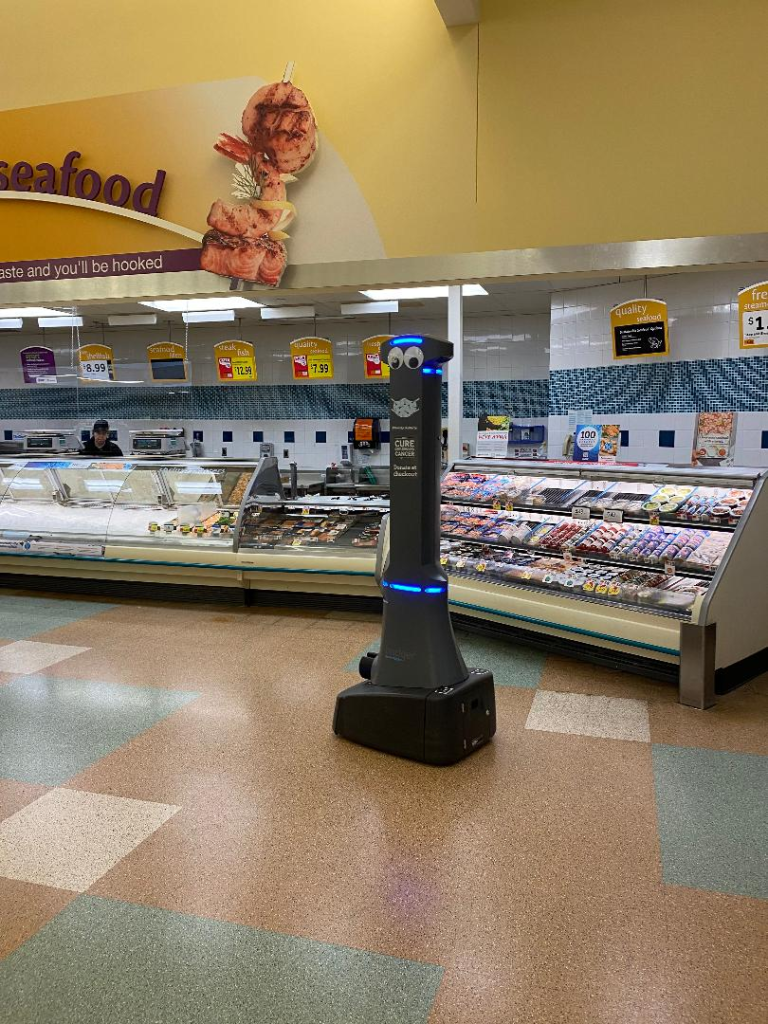
I’m at Stop & Shop supermarket Sunday and turned around and almost jumped straight out of my boots when confronted by their big floor cleaning robot.  Have you seen these guys?  Tall, grey, monolithic, they move slowly down the aisles cleaning the floor underneath and of course they must have some great sensor system to keep it out of trouble.  But man, that f’ing thing scared the bejesus out of me.  It is about 6 feet high, a littler wider at the bottom where it cleans the floor but is overall vaguely of human form. 

It is vaguely of human form, sure, but alien, and lifeless. Maybe that lifelessness is the spooky part, the part that provokes that visceral jump. And that feeling is not just fear, fear of the unknown or the unexpected, but it is a fear mixed also with repulsion. And the repulsion hangs in the soul long after the fear subsides with a “Ha, it’s just one of those cleaning things!”

And, before robots, we had other lifeless representations of the human form to feel creeped out about.  I remember museums as a child, and scenes of tableaux about historic events and such where they had figures staged; I got the same feeling of wariness and repulsion even though the figure representations were always poorly done.  Most looked as if a 4th grade class had enthusiastically embraced a big papier-mache’ challenge. 

And in between robots and old bogus museums, we saw the widespread emergence of store mannequins modeling clothing throughout big clean department stores.  This one is fascinating.  (If you saw the Twilight Zone episode where the store mannequins come alive at night, you get double extra credit.)  Store mannequins, though more lifelike than anything outside of Madame Tussaud’s Wax Museum, still rock the creep factor.  For mannequins, this is an unexpected directional pull;  the more lifelike but still not living these mannequins get, the more disturbing they become.  And there will always be associated with them the special horror wherein a hiker or jogger will find a dead body and inevitably tell the police “I thought it was a mannequin at first.”  There is such an inherent and weird dislike, and in some ways, an elevated dislike.

OK. Visceral. Inherent. I guess I should say that we are programmed from primitive times to fear lifelessness, and especially human form lifelessness. And lifelessness equates to death, the lack of life. So, all of these representations of the human form without life must remind us of death, or at least some kind of evil or zombie-like death thing. And we fear that. We abhor lifelessness.

Why do we fear death? What happens after death? (We’re at the biggest mystery of the universe part now.)

Well, the fact that the repulsion is not affirmatively learned, and is instead automatic, makes me think that maybe somewhere down deep we all know that when we die it really is indeed game over.  Dirt.  Worms.  The long dark empty nothing of your own endless forgottenness.  You are soon completely forgotten as the living world moves on.  This must be the worst thing that a sentient human creature can imagine, and so even general representations of our death carry an instinctive dread. 

Now, can this response coexist with a belief in some kind of utopian afterlife?  Well, it does.  I’m not saying it should, but I’m saying it does.  There are tons of people who believe in an amazing afterlife through some God-centric belief structures and yet they still react to lifeless representations of the human form the same way I do.  I’ll bet the Stop & Shop cleaning machine has claimed many a God-fearing shopper as a fright victim.  Can these two things be reconciled:  the gut-reaction, with the afterlife belief?  I feel like I have to pick a side:  I’m at a roulette wheel with one chip and I have to place it on the red or the black. 

It may be that we were programmed as primitive beings to harbor a dread of death, and what I’ll call ‘the afterdeath’, and, as time evolved, we invented religion as a way to try to de-program the built-in fears of the afterdeath.  By replacing those fears with an afterlife belief system, religions have an answer, and that answer is quite palatable though entry into the various clubs depends upon strange rules.  But religion is an answer, and an answer is often better than no answer.

Though, if you’re still with me, this makes me realize that, ironically, the religious are the deprogrammers and not themselves the ones in need of deprogramming―unless one wishes to lead them back to nothingness.

Well, pick a side. 

Me?  I’ll trust my gut. 

Second Burial


Ideas for poems

conceived and yet unwritten, are meteors

skipped off my atmosphere

briefly made luminous by friction.


The words have gone to space

where even silence is buried.

.

I remember their fading faces

and tuck them into the grave of this poem


this small tumble of words

their only home―


the only flowers at their stone.

The Swing

If you are lucky, you will occasionally be in conversation with a few friends, trading stories as the topics change with random deliberation, like leaves in a stream, gently bumping each other as they spin slowly downstream. The afternoon stretches long before you. Perhaps there is a chuckle here and there, and the clink of a wine glass ringing like a bright piano note.

We are there now.

And once in a while a story will arise wherein you delight in the telling seemingly out of proportion to the importance.  It just happens to be a tickle when you tell it, a little firefly in the big clear bottle of your life. 

Here is how I built that swing:

I had a really big, beautiful house once and two small, wonderful children.  I surveyed my yard to build them a swing.  I love this kind of project and was intrigued that the only really good big strong branch was not only nicely centered in my large yard but was also amazingly high.  I’m certain that most people would say “Yeah, -no.”  But man, I could imagine how long that pendulum would swing, and I had had such a wild outdoor life as a child that I really wanted to make this happen for my own two children―who were at the perfect fearless little ages.  The high branch was way out of any kind of ladder reach, and so I tried throwing a stone tied to a very light (feeder) line over the appropriate branch intersection to get things started but, to my surprise, it was out of reach of my throwing even though the line weight was negligible.  And I could still throw a baseball pretty goddamned far. I kept trying and almost threw my shoulder out.  A couple of days later, I was driving home from work mulling it over when the solution hit me:  I could cast a mackerel-jig over the top of the branch with one of my nice surf-casting fishing rods!  It was an awesome light-bulb moment, and I was deadly with that rod by dint of my being a born and raised Gloucester Fisherman. Ever since I was a young kid, when word got out early summer that the mackerel were hitting just offshore in Gloucester, a fishing rod was my weapon and I was on duty.  I had several friends who were similarly enlisted.  We’d walk or take our bikes to the piers or the beaches and we’d fish, and it was amazing high excitement. 

I should tell you what I mean about this.  (I told you that these leaves spin slowly.)

With a medium weight rod with an open face spinning reel, and 10-15lb test line, one can cast (toss/throw) a mackerel jig a great distance.  Across  a supermarket parking lot.  And one can do so with surprising accuracy.  But first, a jig is an elongated shiny metal weight, maybe three inches long-with a hook out the end-weighing 1-1/2 oz. It is cast, and then reeled rapidly, and jerkingly, back in through the water a few feet below the surface.  The action mimics a small, and perhaps wounded, baitfish to a mackerel.  It is fun to cast, reel back in, and hope for that great strike from the fish, a fish that gives a quick vicious fight, zigzagging wonderfully, until you bring him onto the pier. It will be flapping and flipping wildly like an outrageously artistic little torpedo―rocking a gorgeous blue-green neon zebra sheen.

Back to the swing.  So now I get home, grab my fishing rod and I’m in the backyard, still in my Army uniform, looking up at the tree.  I rear back and whip the rod, firing the jig skywards; it shot up and over the optimal branch intersection, and, letting the line run free, I watched the jig lose its arc and fall all the way back down to my shoulder height.  I attached a heavier line and fed it over, then a professional static-line climbing rope.  Voila!  I’d gotten it first shot, and that’s probably half the reason I love telling this story. 

Then I built the greatest swing!  It was a thick wide plank with a wooden stabilizer bar above and some fancy Mountain Warfare School ropework to make it a safe or, as we say in the ropework world, ‘bombproof’ swing that could fit both kids sitting beside each other on it.  And, that thing swung across the yard in such a giant pendulum swing that it would make kids scream― and want to immediately do it again. 

I’d pull it all the way back with one or two of ‘em loaded in it and run forward pushing it all the way until my arms were pushing as high as they could reach over my head and I’d release the swing and get way out of the way. It would pendulum across the whole yard in such huge swoops and the fun would begin. Eventually, all kinds of swing tricks and goofing around were tried and the children were instrumental in the inventions: the huge circle push that always crashed through a certain bush as part of its loop, the super-twisty ride, the standing full up and pumping old favorite, the laying on the plank-stomach or back, the jumping off into our little plastic pool dare, the riding double. Through our friends and their families, it became a neighborhood carnival ride. All the while, our dog was chasing them back and forth. All the while, the children were laughing and screaming.

All the while, the children were flying.

I sold the house in 2016, and I drove by in 2021 and the swing was still there, looking operational.

So that’s the swing story.

In retrospect, I guess those were the Halcyon Days for me, playing with my children on that swing.  Maybe grilling hamburgers or steak afterwards, as the warm summer light dimmed on a long summer day, the sun handing off to the moon. 

Halcyon Days.  Funny cool phrase.  I learned what it means pretty late in life; it is used to denote a past period that is being remembered for being happy and/or successful.  However, the phrase derives originally from a tale of Greek tragedy wherein it refers to a period of time where storms do not occur.  So, one can think of it with the happiness squarely in the frame, or the lack of unhappiness squarely in the frame. 

Either way, it feels good to remember one’s Halcyon Days.

That’s all.