Ember

The old man had a favorite painting in his little wooden hut. It was a beautiful seascape. The man loved and connected with it, beginning with the nice touch of the thin line of frayed rope stitched into an otherwise ordinary and simple wooden frame. He would stare at the painting when his heart was heavy and be lifted by the movement of the waves crashing against the rocks and along the shore―how expertly done! He’d feel the soft pink and yellow tones that came through the clouds and lit up the cresting waves and it warmed him. Sometimes he’d imagine it as a sunset and sometimes he’d imagine it as a sunrise. It depended on the day. Above all, he liked to watch the seagulls that drifted lazily in the ember light, above the sound of the sea.

He had two grandchildren, a wonderful little girl and boy, and they loved the painting too. They would all joke about seeing the seagulls move slightly in the painting from time to time, depending on the breeze, and would even declare that one or more seagulls had flown away or flown into the picture making the number of seagulls in the sky greater or lesser. They’d announce that the sound of the waves was especially loud today, and they’d all laugh. He’d remember the times they spent at the seashore, and all the times they’d spend together reading stories at bedtime or playing in the autumn leaves, or building forts with lincoln logs, and love always glowed among them in soft pink and yellow tones.

He was looking at the painting now and thought of that difficult time when he moved from their big house into the small hut where he now resides. When the children first visited after the move he pointed at the painting and asked them if any seagulls had left the scene or whether the waves were quiet or loud today. The children barely looked at the painting and grew quiet. He asked what was wrong and finally they said “Mom says the painting is ugly.” The old man was stunned, and gently tried to tell the children that their own experience of the painting is more true than another’s, being careful not to cast Mom in a bad light. Being children, they didn’t fully understand the ways of the world, but they are wonderful children, and the old man always understood this and so he was patient and loving. He was sure that this was a passing moment. But it wasn’t, and the children were allowed to visit less and less until they couldn’t visit at all or even speak to him. The old man’s soul was crushed and the unhappiness of the whole situation was thoroughly alien to him.

For years, the old man has been trying everything within his power to get the children to see the painting as it is, and not as another says it is, but so far he’s been unsuccessful due to contrary and overwhelming messaging coming from another. He has learned how difficult it is for children to see the truth sometimes, especially when forced to choose among those they love. He loves the children as much as ever and thinks of them always.

Always.

Always, he held the children like an ember in his heart and thought “Someday they will see, someday they will see.”

And one day, they did.

.

Withdrawal

To reduce it: a withdrawal date was announced, Taliban resurgence was robust, and here we all are at the airport.

The world watches.

Good friends and family ask me how I feel.

I have done nothing but watch the news this last week, that and sleep, and most of the early news was coverage of the recapture of Provinces that I had deep personal investment in– especially Konduz, Baghlan, Balkh with my Headquarters of Mazar-I-Sharif, and all the rest in the North. I feel surprisingly concerned about it, and for all the predicted reasons: the sunk costs, both in blood and treasure, costs borne by a World Coalition and Afghanistan.

And there is also the fate of Afghan women and Afghan / U.S. cooperators. Among these last, I had personal relationships with many Interpreters and found them consistently to be bright young courageous people yearning to blossom under some 1st World opportunity. What will happen to Assad, an interpreter, and one of the main guys I worked with?

Assad is a really, really likeable guy, and would be recognized as such anywhere, I believe. We liked and trusted him all the way and let him carry an AK-47 though it was against the rules. He was one of us. Also, he was rugged and had a nice sense of humor. He once had some of us almost convinced that Afghan men have learned to see through Burkas. This is the kind of science puzzle that can entertain for long minutes young Americans who are laden with heavy gear and waiting around in the hot sun. And he and others would cook Afghan food for us at night–lamb, rice, vegetables and naan as good as it gets– on Earth, at least. These Interpreters all want to come to the U.S. and I wrote a recommendation letter for Assad as one small part of a multi-year process these guys engage in to emigrate. The process has long been the tougher battle for them in their two-front war.

So. I’ve been thinking about all this. I was oddly placated by seeing lots of news stories start to come out about Veterans’ concerns, and certainly addressing the concerns of the families of wounded or killed Veterans. I guess a lot of people are feeling some emotional turbulence out of this unsatisfying denouement.

So, back to the question: How do I feel? Whole books will be/are being written about the political aspects of this, and I can’t add anything to the politics except by my opinion. The facts of the engagement and the disengagement are, sadly, not historically novel. All the apt comparisons have long spilled out upon the table like marbles. Chase which one you want.

But the feeling is a different thing.

Well. . .there was that blog post of mine on May 3rd called simply “Leaving Afghanistan” wherein I talk about a sophisticated Afghan telling me way back in 2008, telling me with certainty and resignation, that the U.S. presence in Afghanistan ‘won’t work out.’

I also commented in that post on the Russian vehicles left behind:

“Russian military equipment was everywhere. Wrecked tanks, wrecked mobile weapons systems, and damaged armored vehicles of all sorts dotted the roadsides and indeed gathered in great numbers at some of the more prominent bases. My first post (or COP, for Combat Outpost) was in Konduz Province and we had an impressive array of such damaged vehicles at our location. I never then considered the blood and gore that must have painted the insides of every one of these vehicles. Sometimes at night I would walk through the boneyard and feel the great Russian presence amid the angry twisted hulks, the silence, and the shadows.”

That’s how it feels. That’s exactly how it feels.

The Storm

.

It is hot work to be ok

while it is all pressing in—

.

pressing in like the dark,

pressing in like the driving sleet, wind and cold

that pushed the strong little hut atop Mount Washington

one hundred forty four years ago.

.

The hut was chained over the top

into bedrock, but still,

window structures collapsed and the wind

floated the rug a foot above the floorboards.

.

The two men stoked the coal stove furiously all night

until it was red hot, but still,

water froze less than three feet

from it’s glowing sides.

.

It is hot work to be ok—

It is all pressing. And in.

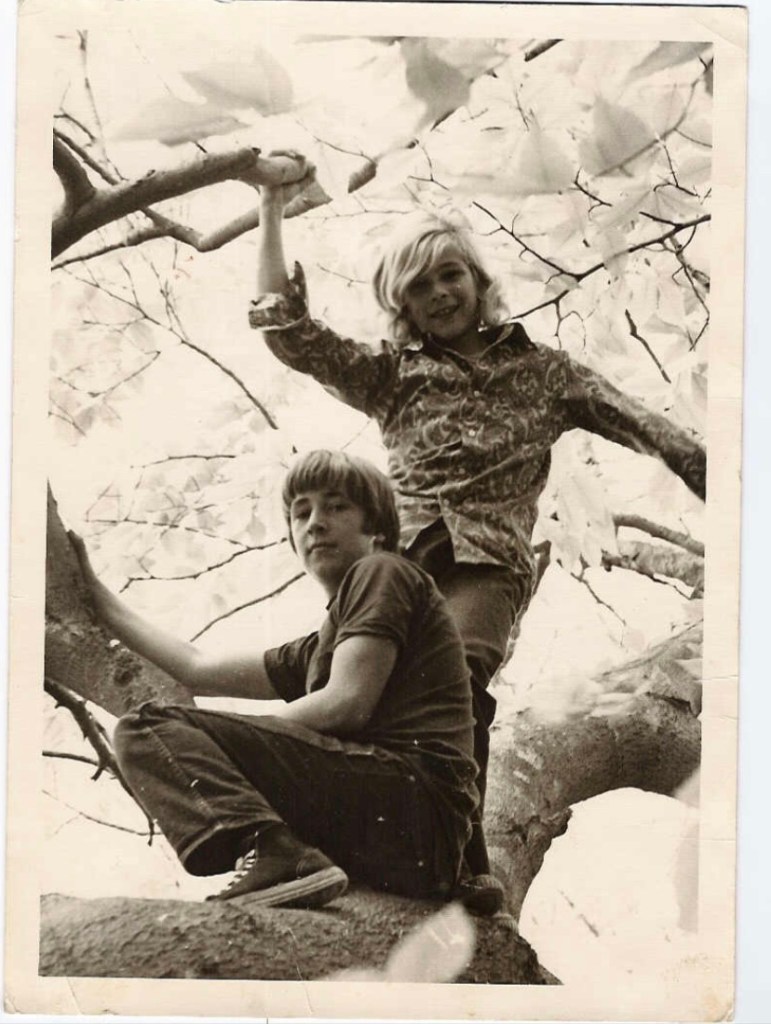
Old Photo

I see old photos of myself and wonder

‘where did those old clothes go?’

I don’t remember me in that colorful shirt

with my friend at the top of that beautiful tree.

.

How much we forget! I’d like to know

that all my clothes are folded somewhere

clean and waiting

waiting to hold me again, waiting to tell me

the story of my life.

.

1973