I noticed an interesting bird around my place and, in the spirit of Spring, decided to make a birdfeeder for him! It is quite a striking looking bird: black and gray wings with a white body and an orange beak and big goofy orange webbed feet. About the size of a football. Not sure what they’re called, but I call it a ‘black & white’.
Given how big it is, I built the birdfeeder by taking a cafeteria lunch tray and affixing it to a post outside my giant picture window with little straps–much the way one might see a ‘cigarette girl’ in old movies walking about a swank smoky lounge selling things to gentlemen. I filled the tray up with ‘Wild Delight Better Blend Song-Bird Wild Bird Food’ about a half an inch thick and waited. I was thinking that maybe the black & whites like to sing and the food might induce them to sing. Well, I didn’t have to wait long . . . after a short while it landed right in the middle of the tray, pecked cautiously for a moment and then broke into song. Well, it wasn’t a song so much as an extended high-pitched undulating and grating cackle, an angry wobbling cackle while he bent his head and neck straight and low and looked at me through my window with his beady eyes. I think he was mad at me, and began to kick his feet around in the birdseed disconsolately, spraying the birdseed about in all directions. It reminded me of a little kid kicking leaves in the Fall on the way to school. So, I guess he didn’t like the birdseed, and so, it’s back to the drawing board.
Over the next week or so, I tried several different types of birdseed but I got escalating displays of anger from the bird. One morning, I was staring out the window watching while eating a toasted English Muffin and this same bird, disappointed yet again with the offered fare, actually shot to the window and pecked at it hard with his beak right where I was standing and seemingly right at my face! I was startled and staggered back! Although I was angry and scared for a second, and worried about the large spider crack that appeared in my big picture window, I thought that he might be trying to tell me something. . . perhaps the way Lassie used to try to lead little Timmy to a realization. Crazy as it sounds, I think he might have been telling me that he wanted the English Muffin. Am I crazy?
I went out my side door and approached the cafeteria tray, still a little shaken, and threw the remains of the English Muffin in the tray. Man, I am telling you, that bird dove onto it and gobbled it up like there was no tomorrow! Voila! He must like English Muffins! I’d never heard of a bird with a penchant for a specific breakfast toast but, hey, I never heard of a lot of stuff. So, it was English Muffins every morning in the tray and I now quickly discovered to my (initial, at least) delight that he has many friends! And they like to play and fight over the English Muffins, wheeling and screeching about. I couldn’t keep enough English Muffins in the house, and it was getting expensive, so I began to experiment with other foods; anything left over from my meals seemed to be just fine and I found out that my many new friends had taken up residence upon my rooftop and even the surrounding rooftops, seemingly waiting for me to appear. While they waited they decorated the area with big white splotches with brown squiggles in them.
The birds had long since shattered the straps to the tray with their horseplay and so the tray was on the ground, having taken a beating from their pecking, scratching and fighting whenever I threw some garbage out there. And great clouds of them began to appear on schedule and I now couldn’t keep up. One day, I just refused to offer anything, but the birds, late in the day after they were sure I was reneging totally, began to wheel about, screaming and attacking the window. It was a scary scene, and one that reminded me of some Alfred Hitchcock movie but I forget the name of it or what it was about. And so I rushed out there with orange peels and I also splashed some French Onion Soup on the ground. This kept them at least perplexed enough to give me a few moments to make a huge batch of Ramen Noodles, which are very quick to make, and I tossed that out there, noodle strings hanging everywhere, and that seemed to placate them.
That was a narrow escape. Things were getting out of hand. And now my big picture window looks like it was the victim of a drive-by shooting with a BB-gun. I needed a source of lots of food and I needed it now.
That’s how I discovered how many dumpsters there are in Gloucester. Man, they’re everywhere if you’re looking! I know every restaurant in town now, and can tell you that the black & whites love old pizza and, especially, french-fries. I dump five-gallon buckets of my harvest out onto the tray every morning and every evening and when there are a lot of french-fries in there, it can get quite dangerous.
Getting enough food takes a lot of time and so I had to quit my job. And lots of my friends and restaurant employees have noticed me in the dumpsters and are getting worried about me. I’m too embarrassed about how I’ve accidentally led those poor birds into some kind of dependent relationship upon me and so I just let my friends and all think I’m homeless and foraging for food. And, of course, I’ve started drinking again with all the stress of hunting garbage all day and those birds being angry with me so often when the buckets of garbage aren’t so top-notch that day. (Those birds are very particular in some ways. It’s funny. Someone should do a study on them.) Anyway, I’m so tired that by the end of the day I rarely shower or change my clothes. Sometimes I’ll be going through bags at the bottom of a dumpster and smelly juice of something or other will splash on my clothes but I’ve gotten used to the smell and the stains.
I still have the apartment with the picture window though, cracked and crazed as it is. However, my savings are gone and my credit cards are approaching maxed-outness trying to keep up with rent while not working and so my friends and all those restaurant employees might soon be right about me after all.
You know. . . there are a ton of these birds I’m feeding every day now. Maybe they aren’t so rare. And their personalities leave something to be desired.
When I was in Afghanistan, we didn’t have many deaths in my region, thank God, but when we did, it was a very, very big deal. The process for dealing with it is so complex that myriad spreadsheets, templates and documents govern it and the whole thing is extremely professional and respectful. I believe it would hearten the families slightly to know what goes on before their loved one even gets on the plane to be transported home. For example, there is always a Memorial Service for the Soldier in the theater of operations first, and there are sixty-seven steps between the initial gathering of the fallen’s personal effects to the start of that Memorial Service. I have the spreadsheets in front of me now. Tons of people are involved from the Commanders, Staff, and Chaplains down to the Soldier’s bunkmates.
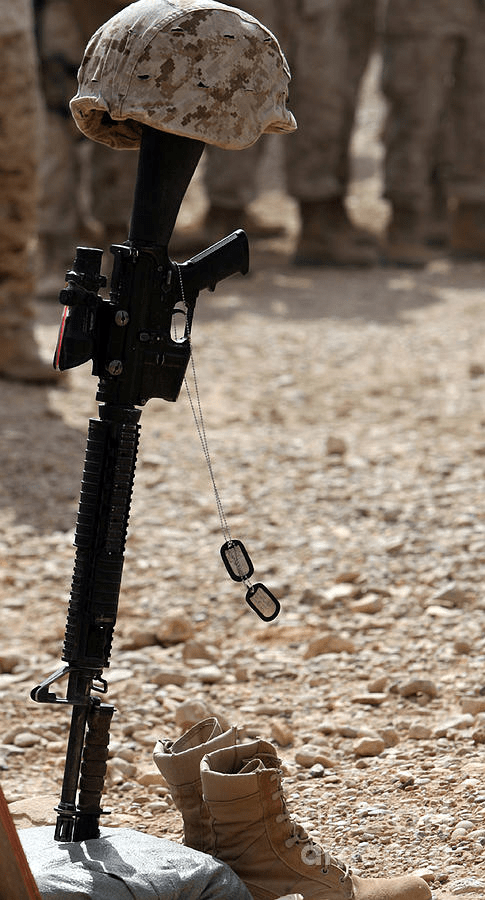
I remember one such Memorial Service. The obvious place for this to happen was in a big hangar-like structure where lots of people could assemble out of the weather, sandstorms, etc. and chairs could be set up with precision. A microphone could be hooked up. Also, there was a platform where the fallen Soldier’s boots, helmet and rifle could be displayed nicely for the ceremony. The question arose early as to the choice of location and as the Operations Officer I was the lead in twenty-two of these steps, and ‘location’ was one of my twenty-two. (Chaplains and other Staff members were the leads on the rest.) I chose the hangar and, surprisingly, for the first time, I got pushback; some people wanted this to happen outside ‘at the flagpole’ in the middle of the compound. I guess that’s what the Soldier’s friends wanted.
The flagpole area was small and had lots of logistical disadvantages, not the least of which was that there were huge generators that ran power for the whole base adjacent to the small clearing for the flagpole; those generators would have to be shut down for anybody to hear anything. I wasn’t used to being challenged on anything as the Operations Officer for a couple of good reasons: I worked my ass off day and night addressing everyone’s concerns and I really was friends with pretty much everybody–I was stunned that I got put in the Operations Officer position and took it as seriously as anybody could. In that position, I knew instinctively and right away that my superpower was not always so much that I could do good as that I could stop so much stupid. So, I was stopping stupid all day long: I revamped many systems and I guess I had a great reputation, and the Regional Commander always backed me up in the rare case of a point of contention among the Staff or Soldiers. And the Regional Commander was the only guy in our nine Provinces who could overrule me. Please note, however, that decision-making is often more nuanced than merely relying upon whether one actually has the authority to make a decision; good leaders at all levels listen closely to their experienced Sergeants and peers and I certainly always did. Of course, Commanders have the ultimate decision-making authority, period.
So, during this blizzard of planning, I wanted to stop the stupid of holding the ceremony at the flagpole. (By the way, the fact that so much stupid happens in a war zone is mostly the function of millions of moving parts, and not any indication of great incompetence. The people were by and large professional, courageous and smart–it’s just that you always need people at the top who can see the big picture, synchronize, and ‘stop stupid’–that’s what we called it back then!) Anyways, contractors across the base were already approaching me about the rumors of the power being cut off to hold the ceremony and were asking about simply holding the ceremony in the hangar. “Jesus, what about refrigeration? Heating and air conditioning? Power tools for all the building that was always going on?”
Yet, interestingly, a fellow Major in my own Operations Center was leading the ‘flagpole’ faction. Bill was a really good guy, very smart and professional, and, by dint of seniority, arguably should have been picked to be the Operations Officer instead of me. But, despite this disappointment, he took it well and we remained friends and worked very closely and supportively together every day, all day, under a crazy stressful workload. We were fellow Musketeers in ‘stopping stupid’ and would have many a wry laugh about it together, day and night. I saw him many years later at a conference and our bond was still there.
Well, Bill got the ear of the Commander and I was quietly overruled. Wow. OK. I certainly didn’t have anything against Bill for all this; it was just one thing. I scrambled to address all the concerns about my parts in the normal planning and now also the family of emergent concerns dealing with the generators all going offline for a few hours. I had so many other balls in the air that there was no time for me to sulk over this little planning defeat for this one funeral.
The ceremony comes, the generators were shut down, and everybody could hear everything in the little space. The flag was snapping lightly in the wind and at the base of the flagpole was the standard but always striking display of the fallen Soldier’s boots, rifle, dog tags, and helmet.
It was a long ceremony: Prelude, Posting of the Colors, National Anthem, and then the ceremony actually begins all the way through the volley firing and the playing of Taps. In the middle there somewhere, the deceased Soldier’s Squad Leader got up to speak.
They had really been friends, and it came through his words immediately. This wasn’t just a Squad Leader/Squad Member relationship. These guys were in the same gun-truck and patrolled every day together and, indeed, he’d been right there when his friend was killed. He now said he was grateful that we’d allowed the ceremony at the flagpole as they were all very patriotic and he knew it was what his friend would have wanted.
Uh-oh.
I’m standing right in the front line of Soldiers and I’m looking right at this guy.
They were on so many patrols together, sharing the constant threat of enemy fire and, more probably, an explosive device in the road that would shatter their truck and their worlds–as did happen. I knew from being on patrol that within any given gun-truck, Soldiers talk on the ‘mic’ among each other all day every day and by the end of a few days, all the guys in a particular vehicle are brothers; they know who likes what kind of music, where they’re from, and, especially, who is the funniest sonofabitch with the insults that fly back and forth. All this while scanning and reporting threats, navigating, and coordinating their movements within a larger convoy of vehicles on a mission.
The Squad Leader continues to talk about his friend, and he suddenly starts crying.
Fuck. Jesus.
Everyone is looking down now politely. Especially me.
He gets himself together and continues: They were also bunkmates, and shared the same little plywood hut partition together and would play Call of Duty together whenever they were in the hut for the night. (I know this video game and it was, and still is, very popular with the Soldiers and probably plays some therapeutic stress-relief function.) At some point, he made some small joke about their playing Call of Duty together and our gathering shared a much needed laugh about it. Although I remember the sudden wave of polite laughter, I didn’t reallyyy hear the actual comment—and I don’t think I heard anything after he started crying.
A slow burn of shame had crept up through my whole body. At the flagpole, under the big American flag, the symbol for all these young guys who love their country and would do unimaginable things to prove it.
“I guess that’s what the Soldier’s friends wanted.”
But it’s not what I’d wanted. Big. Important. Me. I should have seen the big picture–that was my call of duty.
“Someone dies in combat. At Brigade level, he’s a social security number and a status that gets tracked. . . At Division, he’s a storyboard. At Corps, he’s a statistic. At Platoon and Company, he’s a gaping wound in the soul of a hundred men. To his family, it’s the end of the world.”
I once had a Prince throw a feast for me. I know this has probably happened to all of you too, but I’m still going to tell you about it! I’m thinking back on it now that it seems like the U.S. military is leaving Afghanistan for real in a few months. Indeed, the drawdown of U.S. forces and equipment is already operational. A jumble of images surface over this, things I saw during my deployment to Afghanistan in 2007-2008.
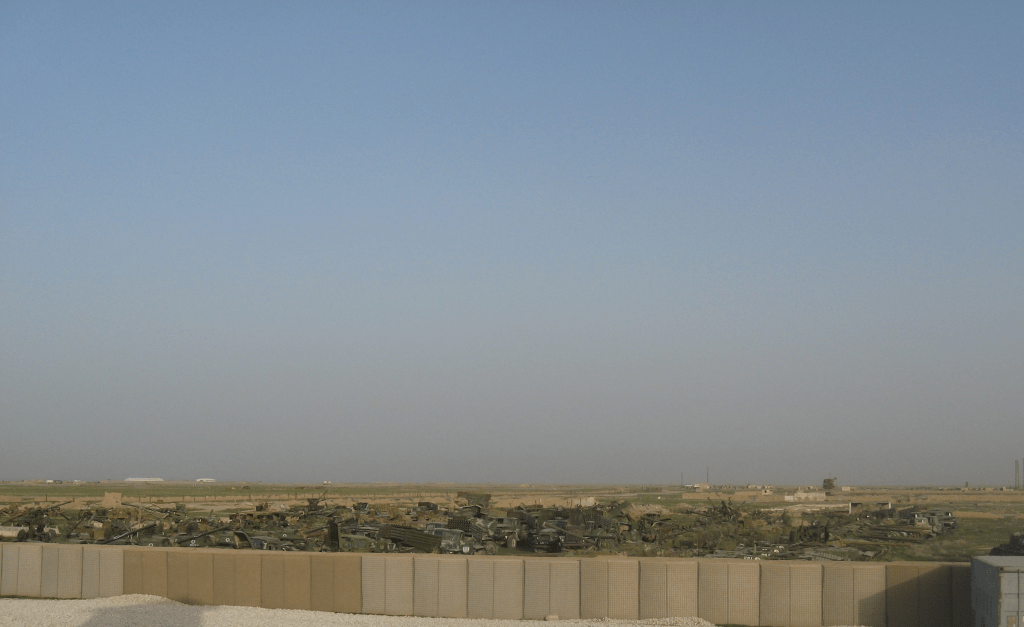
Russian military equipment was everywhere. Wrecked tanks, wrecked mobile weapons systems, and damaged armored vehicles of all sorts dotted the roadsides and indeed gathered in great numbers at some of the more prominent bases. My first post (or COP, for Combat Outpost) was in Konduz Province and we had an impressive array of such damaged vehicles at our location. I never then considered the blood and gore that must have painted the insides of every one of these vehicles. Sometimes at night I would walk through the boneyard and feel the great Russian presence amid the angry twisted hulks, the silence, and the shadows.
It was now the Spring of 2008 and the Americans are here, in great numbers and with substantial Coalition Force backing. Though the Americans were the predominant force, we coexisted in my region with Germans, Swedes, Norwegians and Croats. By this time, all of our HMMV vehicles were ‘up-armored’ and we were even receiving pretty much blast-proof vehicles for transport–a whole family of Mine Resistant Ambush Protected (MRAPs) vehicles were starting to appear ‘in theater’. We had astonishingly overwhelming air superiority, tremendous technological prowess, phenomenal logistical backing, and plenty of big strong Americans with state of the art individual gear and assault weapons. The Americans were eager, even, ready to adopt the new counterinsurgency doctrine (called ‘COIN’) that was new and all the rage. I remember the big show my team made as we were transitioning into our sector about how we ‘wanted to get into the fight’ against the Taliban and associated anti-coalition forces and not get stuck in a quiet area.
My team and I began to make great progress in the District of Emam Sahib, an important district in Konduz Province, and we spent a lot of time there. We really were doing all of the things that ideologues hoped we’d be able to do: building protected areas, digging wells, running electricity, supporting schools for children, (especially girls’ schools), and all manner of humanitarian assistance. We even did extensive road analysis to build more optimal connectivity for the stream of agricultural products to market. All the while we’d conduct presence patrols in our gun trucks to strut safety, and the District flourished under our tutelage and torrent of money. I walked around with $50,000 U.S. in cash at all times and, trust me, it can help you make friends and influence people.
I was glad I was in charge of the team because occasionally I’d realize that not everyone had gotten the memo that we were to work within their culture and not try to simply Americanize the Afghan culture. For example, I was once on the mayor’s rooftop emplacing gun positions when I overheard an Illinois Captain pontificating to a bunch of Soldiers who were attached to me about how we should just take the Afghan Police forces and rotate them to the states one by one to train them at American Police Academies. I quickly stepped in and gave the lecture that needed to happen: dude, they’d still be coming back to Afghanistan and would have to work within myriad cultural complexities that are rooted in centuries. Let’s learn these complexities and figure out how to optimize their performance within the world that they actually live in instead.
The interpreters were a runaway exception to this rule, however. They all spoke great English, had laptops, and loved all things American. They were great to work with, very professional, and treated us very well– even insisting upon bringing me great plates of authentic Afghan food nightly when we were in the COP. Nightly. But here’s the image: every time I’d brief the Afghan and American Generals, which was daily for a good long stretch, I’d have a couple of these interpreters with me. We military would all be in military uniform, both Afghan and American, and the interpreters would be standing beside me dressed in Yankees baseball caps, Willie Nelson T-shirts, jeans and sandals. And we all just rolled with it! I always chuckled inside.
One day I was told that Prince Zahir was coming through the area and wanted to give me a feast. WTF? I learned that he was the son of the last King of Afghanistan and had seen the work we were doing for the Afghan people and so I was invited, and I could bring two people. I took my senior Sergeant, of course, but also the most junior Sergeant. The junior Sergeant was picked because he was a real gun-nut, I mean weapons aficionado, and we’d heard that the bodyguards with the Prince had some cool stuff to show us.
Back to the interpreters. One day I was with a new interpreter, who was substituting that day for one of my regulars, and we were sitting quietly outside some place, maybe waiting for something. I forget what we were doing. He struck me as a serious guy, somewhat older than the others and was plainly dressed. In the smalltalk that ensued, he told me his age and, as his enthusiasm for conversation was a bit halting, I paused. I did the math in my head and realized that he was alive during the Taliban government. Here was a guy that could speak English who could tell me what that was like! I was really excited about this rare chance to really learn something quite historic but I was patient for a few more minutes . . . and then I said quietly “What was it like?” He waited a minute, and I could see him tracing something in the dirt with a stick. Then he said, still looking down, “It used to make me sick to have to watch the stonings.” Holy shit. Oh my God. I couldn’t believe it. Then he said “Every Saturday in the middle of the village. My mom used to take me.” I said something sympathetic and respectful enough, I hope, and that was that. He’d been a child then.
So. The feast was set up outside upon a huge platform that was about four feet off the ground and the platform was covered in a gigantic exotic red Afghan rug–no doubt made for that platform. We climbed the few stairs and sat cross-legged amid the pillows and the formalities began. I was next to the Prince and his primary bodyguard was on my other side. The mayor of Emam Sahib was in attendance, as was the Police Chief. Other bodyguards were there, my guys and some others, I believe. The food was fantastic, with great piles of rice with chunks of lamb and vegetables in it, and all manner of strange little treat. This was at night and there were some kind of small torchlights positioned about strategically. The servants darted in and out of this firelight getting things and we were well attended to.
The conversation with the Prince was pretty formulaic and not very interesting. They were touring the area as a big hunting party. He liked to hunt, and must have been extraordinarily wealthy to vacation like this in the middle of a war zone while supporting a big retinue of bodyguards with state of the art weaponry. And the weaponry eventually came out for all to inspect and admire–not as an ostentatious display but because they knew my sergeants were excited about seeing the stuff. Brand new high-tech rifles, shotguns, pistols, and I guess it was the best of everything according to my guys.
And so I ended up talking to the chief bodyguard. And I’m glad I did. It turned out that he was educated in the United States, was still young, spoke perfect English, and was intelligent, articulate, and very . . . well . . . smooth. And also big, strong and very well dressed. I could see why the Prince had him as the chief bodyguard and, I’m guessing, coordinator of all his activities. This guy was very interested in talking to me. He seemed, actually, a little intent on talking to me. Talk turned from the usual pleasantries to the U.S. presence in Afghanistan. This was in 2008. He asked me finally how I thought things would go. He leaned in when he asked this, and got quiet. I wondered for a minute why he would ask such a politically sensitive question but it seemed important to him. I gave him a stock optimistic response: “we’ve got the whole coalition here, look how great it’s going in Emam Sahib, the new ‘COIN’ philosophy of military effort, etc.” . . He listened carefully and then, and I’ll never forget this in the flickering light, got a very sad and resigned look on his face. He leaned in and said “I don’t think so.”
Hmmm…. This guy was college educated in the U.S., but born and raised in Afghanistan, and, I got the feeling, probably had always traveled in the upper circles of society both here and there. I responded with some more talk, back and forth, and it was all polite and all, but then, he said it again: “I don’t think so. It’s not going to work.” Again, spoken softly and with resignation. I couldn’t believe it. Of all people, and of all the times to say this! We had so much going on in the country right then, so much money, effort, international good will. And then, alas, I realized that he didn’t believe that he was only giving me his opinion, he believed that he was teaching me something. He was telling me something out of compassion. He didn’t want me to get my hopes up. Wow. I was a little stunned. I shook it off and we got on with the rest of the feast, the pleasantries, and we said goodbye. I never saw him again.
I heard someone on the radio yesterday talking about how we’re going to try to get all of our equipment out of there but the guy on the radio didn’t even believe what he was saying and it bled through his statement. We’ve been there for 20 years and are now negotiating with the Taliban for imminent withdrawal. And I wonder. I wonder about the interpreters–all those young kids suddenly in great danger. And I wonder about the Taliban, and what they will do. I fear what they will do.
And I wonder about that guy beside me on the red rug in the firelight that night, and how he knew.
When my little boy Lincoln was in Cub Scouts we were boon companions. I always took him to Cub Scouts myself and Cub Scouts was especially bonding for us. The slight regimentation, the little uniform, outdoorness, other boys, and arts and crafts were just what a boy his age loved and needed.
Near Thanksgiving one year, the last year he was with me, we arrived early at the church where our meetings were held. It happened to be a gorgeous night and, along with other Dads and sons, we hung outside for awhile. Though November, it was the kind of warm fragrant night that was suffused with energy, like a deep summer night, and the little boys ran around like a pack of dogs alternately chasing and being chased on the wide lawn. I was in the thick of it and was lucky that the Army had kept me in good shape. I became a Bear as I was the only Dad playing and as I chased the kids I would ‘accidentally’ stumble in the grass and all the little boys would then turn and ‘get’ me, piling upon me until I would recover and rise like a bear, growling and roaring so loudly and accurately that I scared the boys (and myself!), and the game would resume: back and forth. Lincoln loved this game as it was similar to a game we often played when we were alone, a game simply called Ninja Bear Fights. He was a Ninja, I was a Bear, and any patch of green grass was a field of honor ready for battle and grass-stained jeans.
Finally we went inside, chests heaving, and after the Pledge Of Allegiance and some preliminaries, the ScoutMaster described tonight’s craft project. The kid’s were to make turkeys for Thanksgiving, but with a twist. On the feathers of the turkey, front and back, the kids were to write with a marker the many things that they were grateful for. Awwww. . . What a nice Thanksgiving thing to do! The ScoutMaster gave some examples: your family, a nice home, your bedroom, Cub Scouts, maybe a favorite teacher at school or a favorite toy, etc. . .
Materials, glue, and scissors were handed out and the boys went at it. They cut out of construction paper the head, beak, feathers, affixed googly eyes, and wrote out their grateful things on the feathers and all this was to be affixed with glue to a little plastic cup.
I drifted back from the table for a little while and was making smalltalk with a couple of other Dads. Lincoln was at a table with a bunch of other little boys and after awhile I noticed the ScoutMaster talking to him. Lincoln looked a little confused and so I sauntered forward. The ScoutMaster was gently encouraging Lincoln to not write the same thing over and over on the feathers; on five of the six faces of the three feathers Lincoln had written “My Dad”.
I hadn’t noticed this and when I saw what had happened I was in shock. The ScoutMaster, now that I was in the conversation, looked at me with a twinkle in his eye, hoping for me to help him give Lincoln some encouragement to write something different at least on this last feather space. I remember that I had difficulty speaking, as my heart was being squeezed in sugar, but I mumbled something in agreement with the ScoutMaster. Little Lincoln looked up and scanned each of our faces, rapidly taking in data to figure out what to do. . . I can still see him glancing back and forth, trying to figure this adult conundrum out.
Well, the turkeys came out adorable as you’ve already guessed. I’ve kept Lincoln’s turkey ever since, it’s been about seven years now, and I even laminated it at one point as it was fragile and was getting beat up during the so many moves I’ve undergone since the divorce. I came upon it recently and reinstalled it atop a table in the place I moved into recently.
Oh, and what did Lincoln end up writing on that last side of that last feather?: “Mostly My Dad”
(1) knowledge gained from investigation, study, or instruction (2) news, intelligence (3) facts, data
Nowadays, we all feast upon representations of information; some of what we consume is actual information. But, the actual information contained therein is increasingly cut with opinion, hyperbole, and even lies. This dilution entices people to indulge their own confirmation biases, as there is something for everyone at the buffet ever since digital media exploded both the number and orientation of sources of news ‘feed’. This confirmation bias, easier than ever to satisfy, has dramatically polarized us, as the Democrat/Progressive and Republican/Conservative factions can each draw strength and righteousness from the same representations of information available to all of us. And actual information becomes both more difficult to discern and, more troubling, ever less influential as to the issues at hand. It is shocking that we have now reached the point in American society where people can, and do, draw entirely different conclusions from the same set of (I want to say ‘facts’, but we know better, don’t we?) representations of information. And people act accordingly—we are what we eat.
I’ve watched tsunami footage on YouTube. Jesus, it’s unbelievable. There is a lot of footage of the moments before a tsunami hits due to the fact that people like to vacation on coastlines, and people like to film each other on vacation. Therefore, lots of people, unaware of an impending tsunami, happened to be filming themselves and their families on various beaches and resorts when a tsunami began. As we know, first the water recedes dramatically due to the impending wave reaching the shallows and rising up, drawing the coastal water back underneath it. It is such an abnormal and marvelous thing that people stand around and wonder at the sudden phenomenon of large stretches of empty coastline, fish flopping, where there was a normal ocean just a moment before. Tragically, many of these people lose precious time trying to comprehend it and unwittingly forfeit the chance to get to high ground due to their confusion. When the tsunami wave comes in, it comes as the most heavy, powerful and unstoppable force on Earth, destroying everything in its path. The greatest achievements of mankind lay in wreckage.
Back to information representation: So, what happened on January 6th, 2021? Are we still standing around and wondering?



 Penultimate
You must be logged in to post a comment.